Meta releases 30B Muse Glimmer model for single consumer GPU, challenging cloud APIs
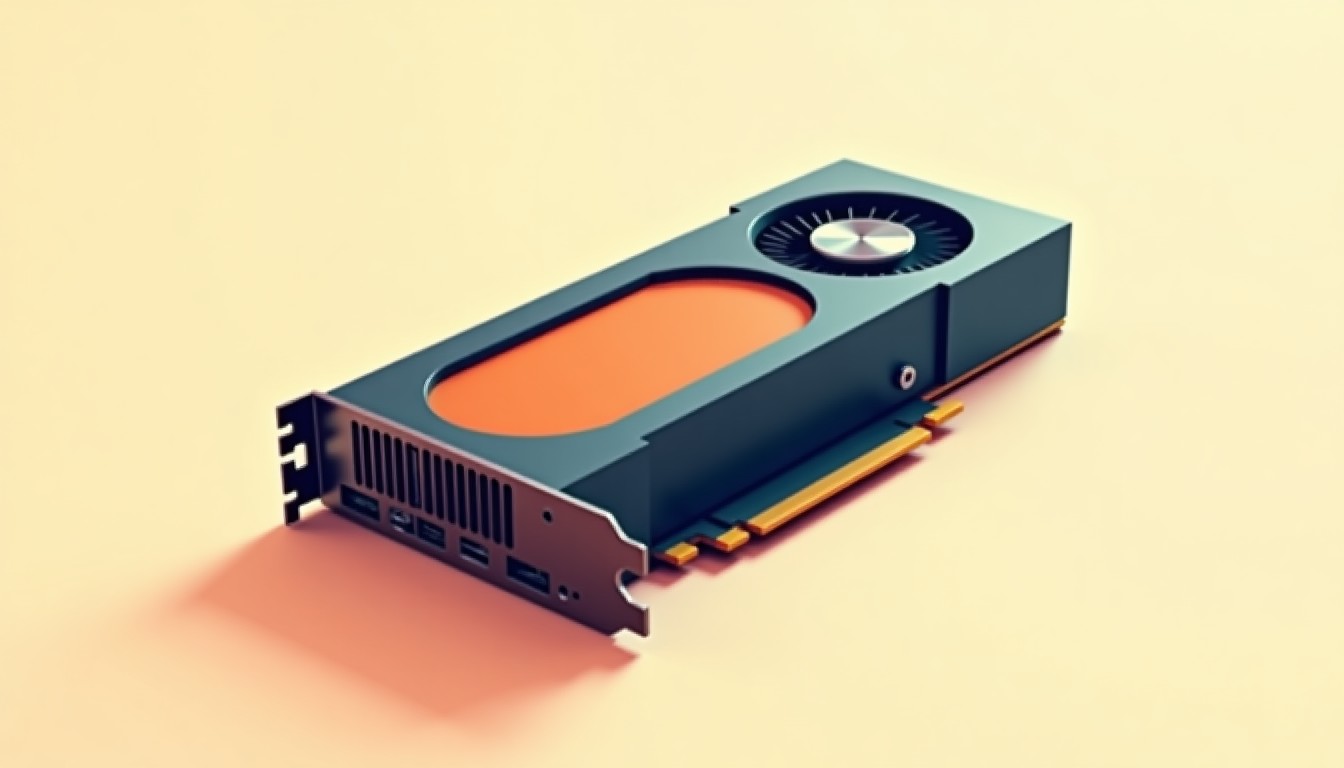
Meta Superintelligence Labs released Muse Glimmer, a 30-billion-parameter language model designed for continuous operation on a single graphics card for gaming. The model is available for free with weights on HuggingFace under an Apache 2.0 license, putting direct pressure on cloud-based players. A model that can run on a home PC could replace a sizable portion of the monthly subscription fees users currently pay for API access.
The uncompressed model required more than 55 gigabytes of memory, making it irrelevant for standard consumer hardware. Meta quantized the weights to roughly 4 bits, shrinking the model size to under 20 gigabytes. This leaves enough headroom inside a 24- or 32-gigabyte memory envelope for critical auxiliary components, including KV cache, a perception encoder for screenshots, and a speculative decoding helper.
On the MCP Atlas benchmark, the compressed model leads competitors with a score of 75.5, compared with 54.2 for Gemma4-31B and 62.5 for Qwen3.6-27B. However, the advantage flips on computer-control and terminal-code-writing tasks, where Qwen3.6-27B scores higher on OSWorld-Verified, TerminalBench 2.1 and SWE-Bench Verified. The implication is that the model is strong on general inference but lags behind rivals on direct OS-level technical work.
Instead of generating one token at a time, Muse Glimmer uses a small helper network called DFlash that predicts an entire block of tokens ahead. The main model validates the block in a single pass, accepts correct guesses and corrects the wrong ones. On an Nvidia RTX-5090, this method boosted decoding speed from 74.9 to 233 tokens per second, a 3.1-fold increase measured with the llama.cpp runtime.
Apple silicon benefits less from the technique. On an M5-Max processor the speed improves by a factor of 1.8 to 50 tokens per second, and on an M4-Max by a factor of 1.5 to 38 tokens per second. The speculative decoder yields a much larger jump on a desktop GPU than on a Mac, where throughput moves from 23.7 to 38 tokens per second versus the sharp rise on Nvidia. The practical conclusion is clear: to run the model at full capability, one should stick to gaming-grade hardware rather than Apple’s architecture.